
Founder’s Note: Jason Perz is as good as anyone at seeing through headlines at what’s really happening across financial markets.
And he probably knows more than anyone about trading commodities generally and energy specifically.
Here’s Jason with another deep look at recent price action. – JC
By Jason Perz
When most investors see oil prices get this volatile, they immediately assume it’s bad news for airlines.
That sounds logical.
After all, jet fuel is one of an airline’s largest operating expenses.
But the market is telling a different story.
Take a look at this chart:
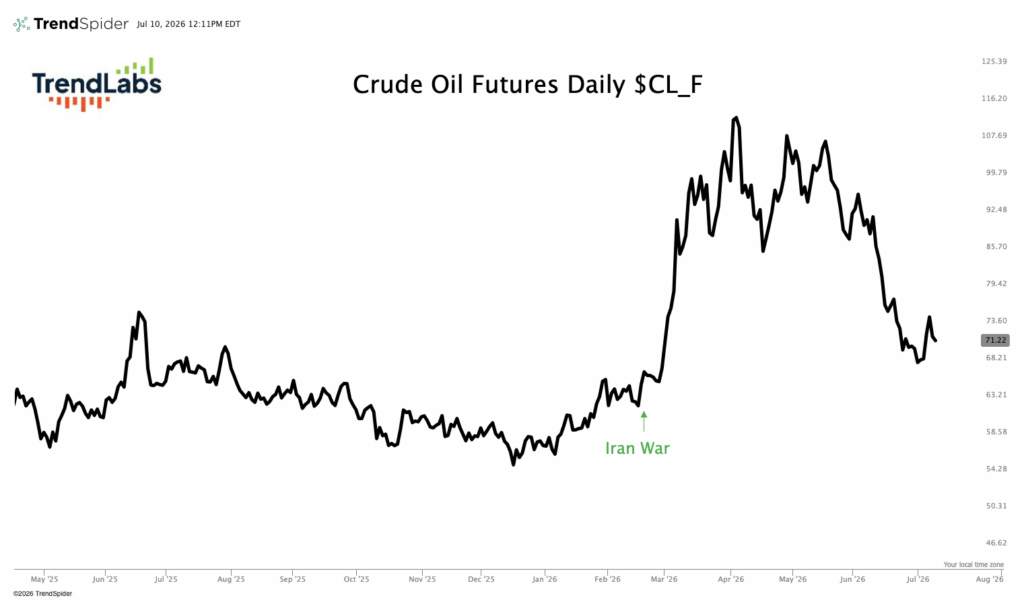
Crude oil has experienced one of its most volatile stretches in years.
Prices exploded higher as tensions surrounding Iran escalated, only to reverse sharply as fears of a prolonged disruption faded.
It’s been an incredibly difficult environment for anyone trying to predict where oil goes next.
Now, look at a second chart:
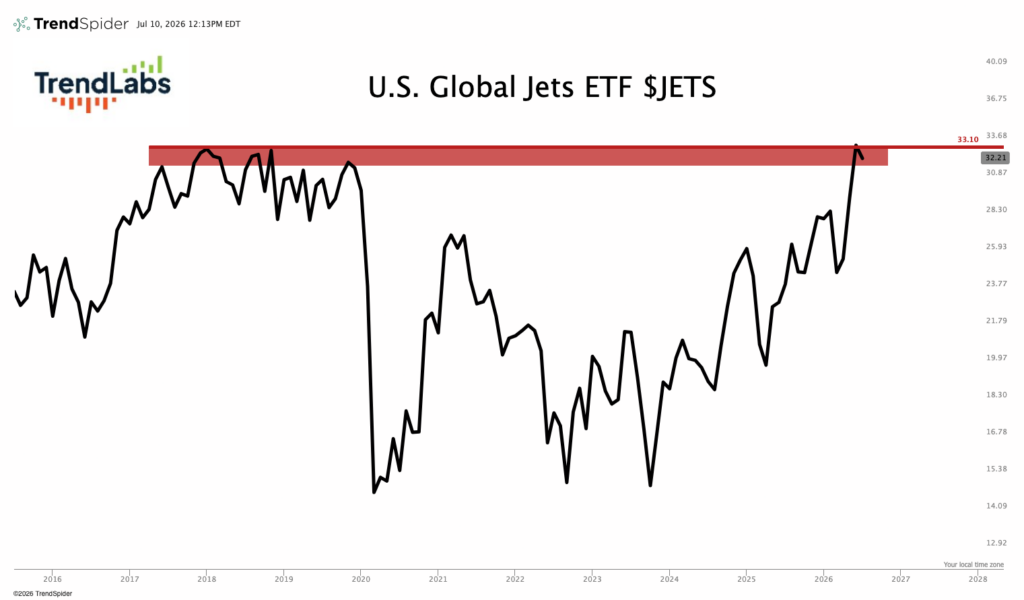
The U.S. Global Jets ETF (JETS) is quietly pressing against all-time highs.
That shouldn’t happen if higher oil prices alone dictated airline profits.
Volatility Creates Opportunity
The reason is simple.
Airlines don’t just react to fuel prices. They manage them.
Most major airlines hedge a portion of their fuel costs months in advance, adjust flight schedules, shift capacity toward stronger routes, and raise ticket prices when demand allows.
While geopolitical events can create short-term spikes in fuel costs, they also create pricing power when travel demand remains healthy.
We’ve already seen airlines pass along some of those higher costs through stronger ticket pricing while continuing to benefit from solid passenger demand.
Higher load factors mean more seats are being filled, helping spread fixed costs across more passengers.
In other words, they’re turning lemons into lemonade.
That helps explain why airline stocks have remained remarkably resilient even as crude oil has swung wildly over the past several months.
Price Is Telling a Different Story
That’s why I always tell people to watch price instead of relying on assumptions.
If the market believed higher oil prices were going to permanently damage airline earnings, these stocks wouldn’t be sitting near all-time highs.
Of course, the geopolitical backdrop still matters.
If tensions in the Middle East were to escalate significantly and keep oil prices elevated for an extended period, margins would eventually come under more pressure.
On the other hand, if the conflict continues to cool and oil remains contained, airlines could benefit from lower fuel costs while maintaining many of the pricing gains they’ve already achieved.
Either way, these charts are telling us something important.
Oil has been extremely volatile. Airline stocks haven’t.
That’s a sign of underlying strength.
The biggest lesson here isn’t about forecasting crude oil. It’s about recognizing when the market refuses to behave the way everyone expects.
Sometimes the strongest signal is when bad news simply stops pushing prices lower.
Right now, that’s exactly what airline stocks appear to be saying.
Save the bees,
Jason Perz
Senior Analyst, TrendLabs