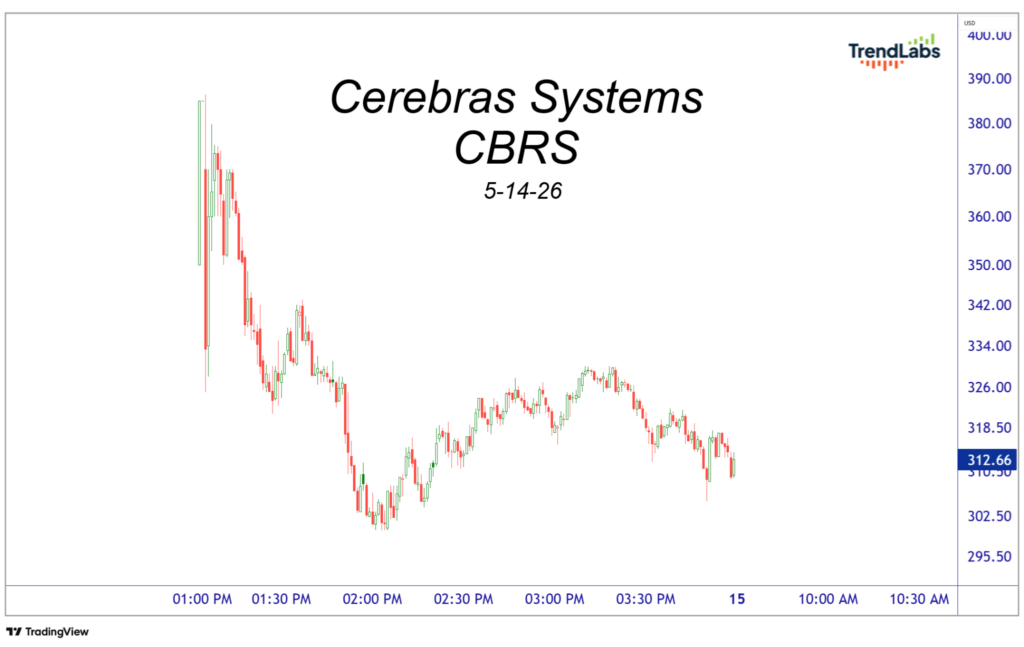
The new Cerebras (CBRS) IPO could not have been more perfect.
The deal was supposed to price around $185 a share. The thing opened yesterday around $350. Ran to $385. And this gave it a valuation up near $100 Billion.
Financial Twitter lost its mind. CNBC probably needed a cigarette.
Then just like that, 80 points disappeared.
Welcome to the public markets.
This is the part nobody tells you when they’re hyping these giant IPOs. By the time companies this big finally go public, they usually don’t need your money anymore.
The factories are built. The employees are hired. The venture capitalists already made their fortunes.
Now they want liquidity.
That’s the game.
And, honestly, good for them. That’s what private equity and venture capital are supposed to do. They take enormous risks early on and eventually cash out.
The problem is the public always shows up thinking they’re getting in early.
They’re not.
Most of the time, they’re arriving at the exit.
We’ve Seen This Movie Before
The funny thing about these giant IPOs is that people always treat them like once-in-a-generation opportunities when historically they’ve been some of the worst trades imaginable.
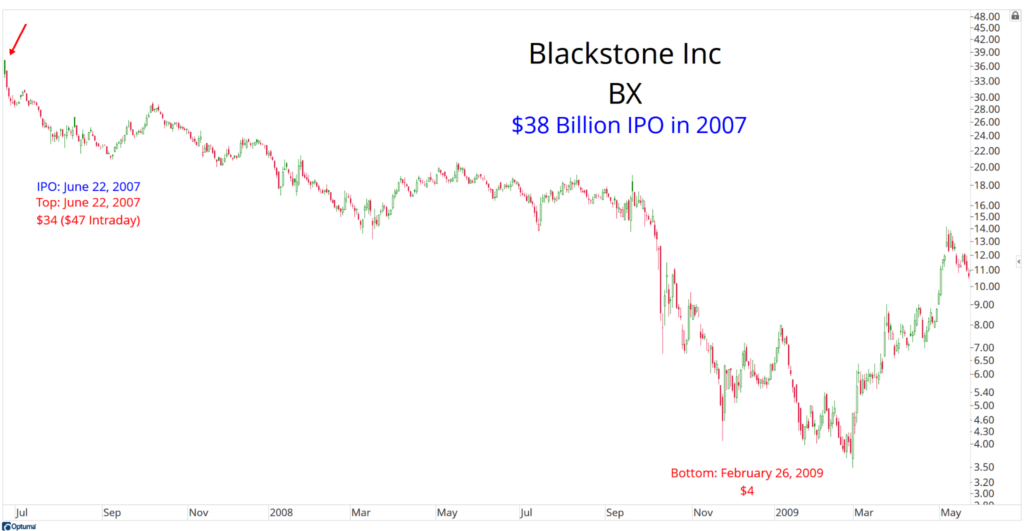
Blackstone (BX) came public in June 2007 in one of the largest IPOs ever at the time.
That day marked the highs for BX before the stock got destroyed during the Great Financial Crisis that began just a few months later.
Shares of BX fell 90% immediately after the IPO:
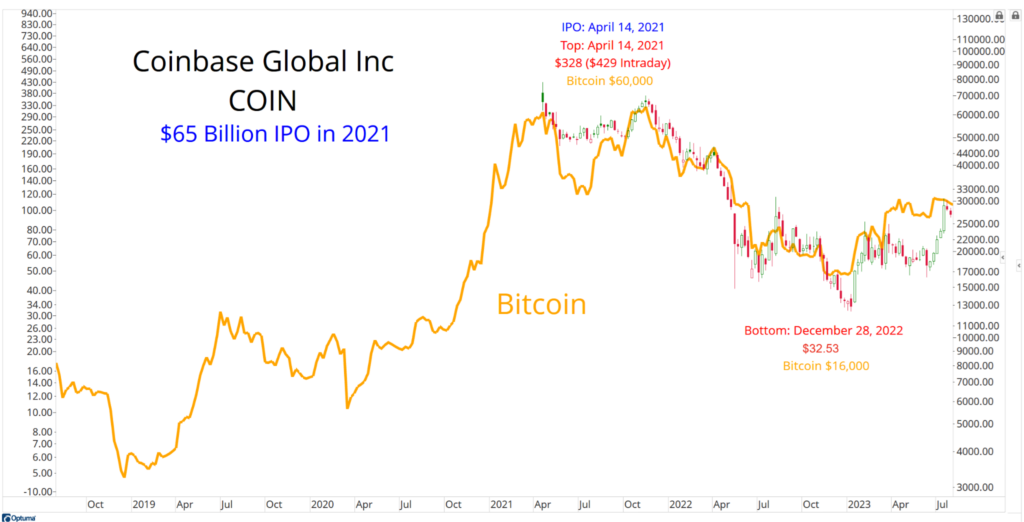
Coinbase (COIN) came public in April 2021 at a valuation around $65 billion. The stock traded at $429 intraday that first day. By early 2023 it was sitting near $31, losing over 90% of its value.
That also marked a major top for Bitcoin, too:
Rivian (RIVN)? Same story. Huge excitement. Huge valuation. Huge narrative. The stock went from $172 shortly after the IPO down to $8.
Uber (UBER) lost 70% of its value immediately after its IPO.
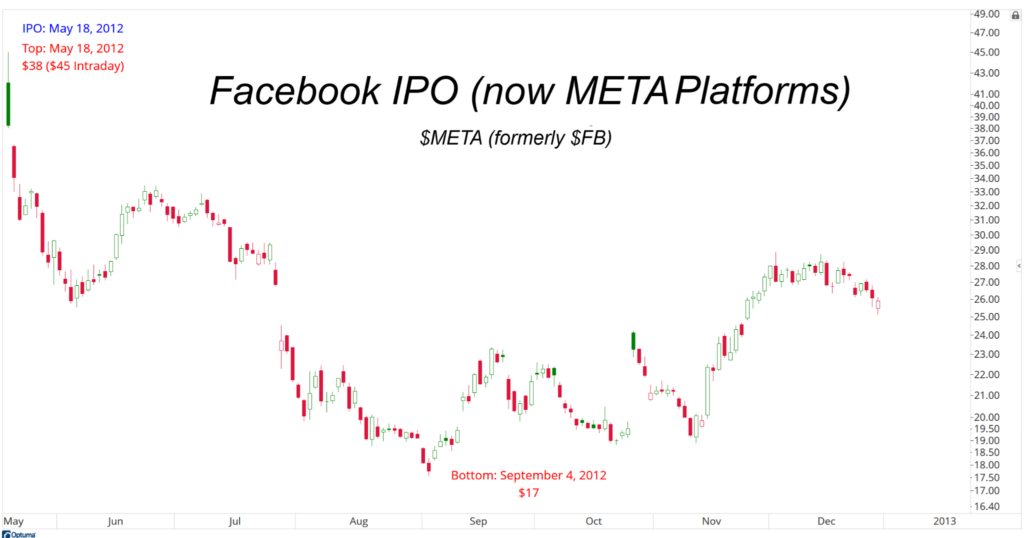
Facebook, now known as Meta Platforms (META), got obliterated after its IPO, too.
Everybody forgets that part now because the stock eventually became one of the greatest winners of this generation.
But at the time? It was a disaster, immediately falling over 60%:
And that’s the important distinction.
Just because the IPO was a terrible trade doesn;t mean the company is doomed forever.
It just means the market needed time.
Time to digest the supply. Time to shake out the tourists. Time for price to reset expectations.
That’s the part investors constantly confuse. “Great company” does not automatically equal “great stock” right now.
Sometimes the greatest companies in the world are horrible stocks for years.
The IPO Price Is the Tell
One of the most important levels in any stock’s life is the IPO price itself.
That’s chapter one, page one. The first real auction between public buyers and sellers.
And once a stock loses that level, you’d be amazed how often it acts like resistance for years afterward.
Meta is the perfect example.
The stock peaked around $45 shortly after the IPO, then collapsed to $17 within months.
People thought the company was dead. Mobile ads supposedly wouldn’t work. The growth story was over. Everybody hated it.
Then something changed. The stock reclaimed those IPO highs in 2013. And once it got back above that supply?
Off to the races:
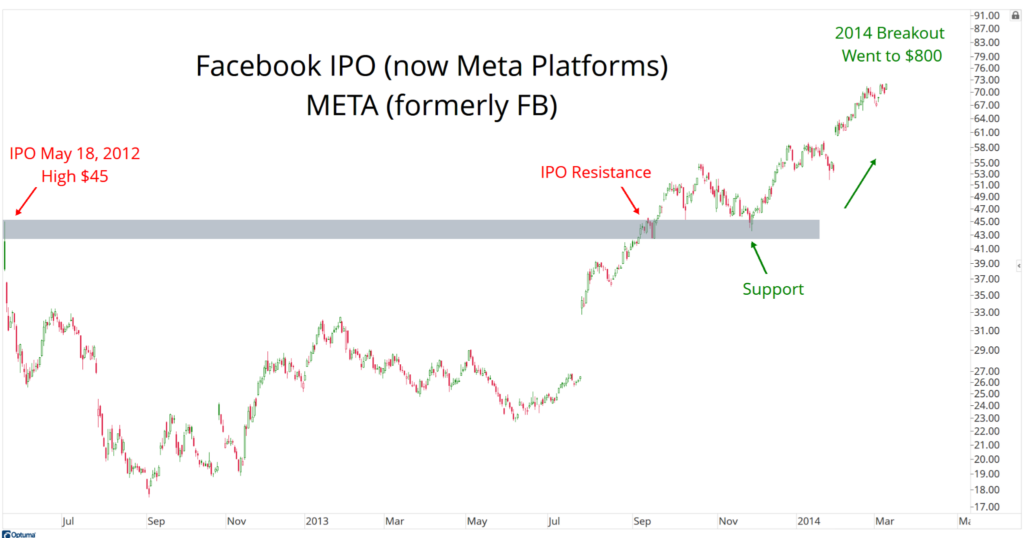
Forty-five bucks eventually became nearly $800.
That’s how leadership works. Not straight lines. Not perfection. Not fundamentals.
Supply and demand.
So now we get to ask the question everybody really wants answered.
Is Cerebras different?
Maybe. Maybe not.
Maybe this thing becomes the next great AI monster and eventually grows into something far bigger than today’s valuation.
Or maybe this is just another giant liquidity event being dumped onto the public at peak enthusiasm for the theme.
The good news is we don’t have to guess. The market will tell us.
And now we know the level.
That IPO high around $385?
That’s the number.
Stay sharp,
JC Parets, CMT
Founder, TrendLabs