
Everywhere you turn, somebody’s calling for the next big crash. You hear it on the podcasts. You see it on the news.
Big recession… Credit crisis… The whole thing is coming down.
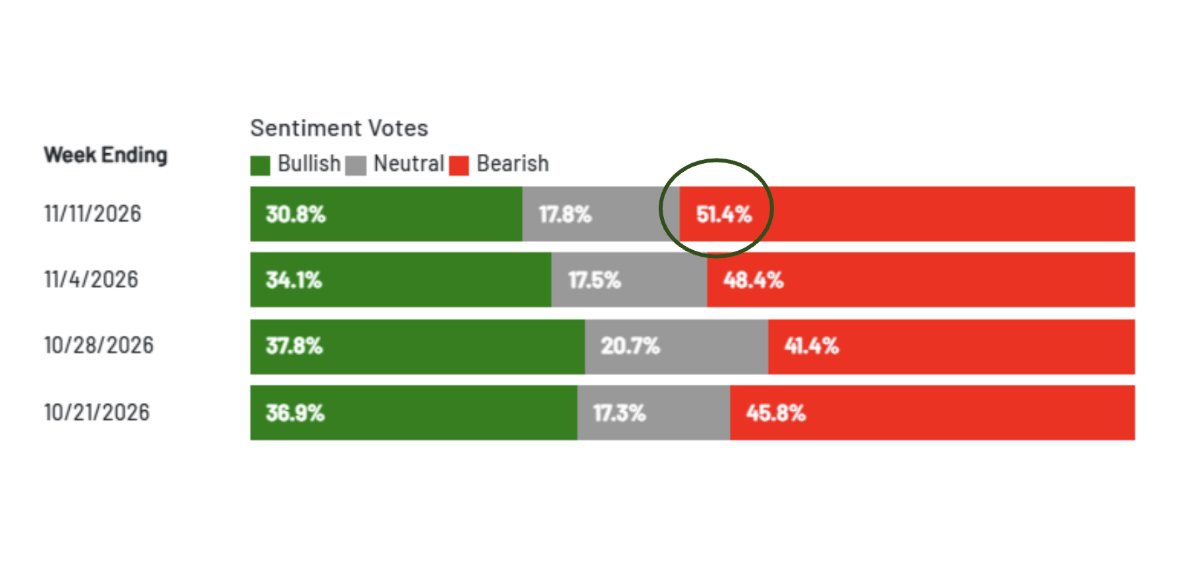
This week’s AAII sentiment survey says half of individual investors expect stocks to fall over the next six months:
On Tuesday, an economist went on a big show and laid it out.
Private credit is a mess, he said. Companies borrowed a ton to build those giant AI data centers. Credit stress is rising.
He even put odds on a crisis, like he was calling a football game.
So, if all of that is true, where would you see it first? Not in a podcast. And not in a survey.
You’d see it in the stocks that sit right in the middle of the system.
We Don’t Have Bull Markets Without Financials
Here’s the part that doesn’t fit the scary story.
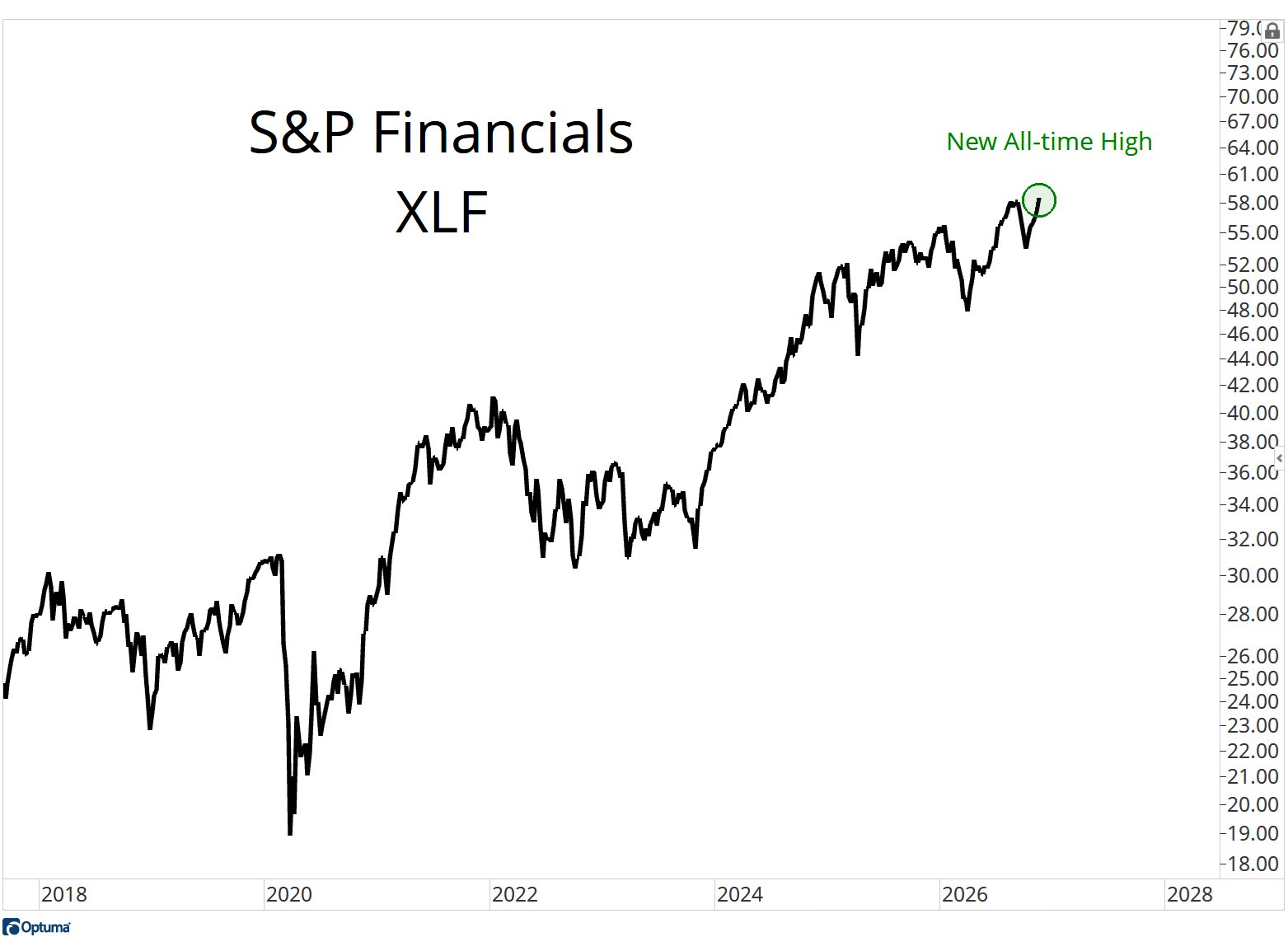
While everybody talks crisis, the big financial stocks are working on their sixth straight “up” week.
Not down six weeks. Up six weeks!
The main financial ETF, the Financial Select Sector SPDR Fund (XLF), just hit fresh all-time highs and is pressing right back up there again.
This isn’t one or two giant banks dragging the group higher.
The equal-weight financial ETF, the Invesco S&P 500 Equal Weight Financials ETF (RSPF), is doing the same thing.
Also up six weeks in a row. Also at its own all-time highs.
That tells us the average financial stock is strong, not just the monsters.
Remember how this streak started. In September, financials had fallen hard for about a month. That was the peak of the fear.
Since then, the same stocks everyone said would get destroyed have ripped right back and taken out their old highs.
I’ve been saying for a long time that we don’t have bull markets without financials. We do not get sustainable bull markets in America if the banks are a mess.
Banks do not sit on the edge of the economy. They sit in the middle of it.
In that post I called It Started With the Banks, I talked about how our whole market system began with banks.
Those old banks are still inside names like JPMorgan Chase (JPM) and Bank of New York Mellon (BK) today.
Back in May, I even called financials on a relative basis the most bearish chart in the world.
On that chart, financials were making new lows compared with the rest of the market.
Even then, I pointed out that the absolute charts of the banks were fine.
Now the absolute charts have answered: new highs, and six up weeks.
That’s not what a group on the edge of disaster looks like.
What Real Trouble Looks Like
I had a front-row seat from 2007 to 2009. That’s what a real financial crisis is like.
The banks didn’t wait for a podcast to tell you. They rolled over first.
They broke down a year before the rest of the market topped. The stocks were the early warning system.
Why? Because banks are the transmission.
If credit is seizing up, if loans are going bad, if the system is really about to crack, it hits the banks first. Their earnings, their balance sheets, their funding, all of it.
And the people who own those stocks don’t sit around, either. They vote with their feet. They sell.
So I listen to the stocks.
Right now, the group that would be in the most trouble in a true credit crisis is not breaking down. It’s breaking out.
The average financial stock is acting fine. The main ETFs are at all-time highs.
The streak off the September washout has been straight up.
So let me ask you what I’m asking myself.
Is this all because a major recession is coming and the whole system is about to collapse?