For over a decade I lived in New York City, which means I went out a lot and ate very well. It’s hard not to.
Throughout my 20s, clients and colleagues would take me out to incredible restaurants.
My dinners with market friends would turn into five-hour marathons, and there was always great food and even better wine on the table.
Every single time, someone would ask me, “JC, do you like the wine?”
I’d say, “Yeah, it’s great,” or, “Eh, not really.”
That was it. That was the full extent of my wine expertise. I could tell you if I liked it. I could not tell you why.
I’d been to Bordeaux. I’d been to Tuscany. I’d tasted some of the best wines in the world. Still had no clue what I was doing.
Which, if we’re being honest, is exactly how most people approach markets. They like something. They don’t like something. Ask them why, and it gets real quiet.
When I moved out to California in 2015, I decided to fix that. I was living in Sonoma, surrounded by some of the best wine in North America. It felt irresponsible not to learn.
So I started reading. Talking to people who actually knew what they were doing. Spending weekends tasting different varieties and styles.
Slowly, things started to click.
The Deductive Method
At some point, a futures trader buddy of mine, Eli Radke, convinced me I could probably pass the Introductory Sommelier Course & Exam without really studying.
Which sounded perfect, because I’d already gone through the vigorous Chartered Market Technician (CMT) exams and wasn’t planning on going through something like that again.
So here we go. Reno, Nevada. Early June. Road trip.
I get there and immediately realize something important. Everyone else studied. Most of the room worked in wine. I’m sitting there like a tourist who wandered into the wrong conference.
Two full days. Master Sommeliers teaching everything from regions and grapes to laws and production methods. Tastings nonstop.
And somewhere in the middle of all this, it hit me.
They’re doing the exact same thing we do.
They call it the “Deductive Method.” Here’s the framework they use.
You look at the wine. You smell it. You taste it. At each step you eliminate possibilities.
You’re not guessing. You’re narrowing.
If the wine is white, it’s probably not a Cabernet Sauvignon. Big chunk eliminated.
If it’s pale and high acid, it’s probably not something heavy and oak-driven Chardonnay. More eliminated.
By the time you get to a conclusion, there are only a few logical answers left.
That’s technical analysis.
If a stock is making new multi year lows, it’s probably not in an uptrend. Eliminate it.
If the market is making new highs, we’re probably not buying the weakest sectors. Eliminate.
If momentum and relative strength are confirming, we keep narrowing.
Price is just the final output. Just like wine is the final output of the grape, the region, and every decision along the way.
Different inputs. Same process. That was the lightbulb moment.
They don’t guess.
They conclude.
Getting Smoked
I passed that first exam.
Walked out of Reno feeling pretty good about myself. Thought maybe I had a better handle on this wine thing than I realized.
Which is exactly when you get humbled.
The Certified Sommelier Qualification is a different animal. Written test. Blind tasting. Service. People watching you. Judging you. No hiding.
My first attempt?
I got smoked. Bombed the written exam. Completely unprepared.
Bombed the service portion, too. Even worse because now you’re doing it in front of people.
But I actually passed the blind tasting portion! Two whites and two reds. The grape varietal, the region, the vintage, the whole thing.
I actually passed that part. And that was everything. Because it told me something important.
The part that required a process – where you take in information, eliminate possibilities, and come to a conclusion – was already there.
I didn’t need to learn how to think. I needed structure. Which should sound familiar.
You can have great instincts in markets. You can feel things. But without a process, you’re just guessing and hoping it works out.
So I had a decision to make. Move on, or take it seriously.
The first time I relied on instinct. The second time I built a process.
Studied regions. Grapes. Structure. Practiced the steps. Worked on service. Fixed the weak links.
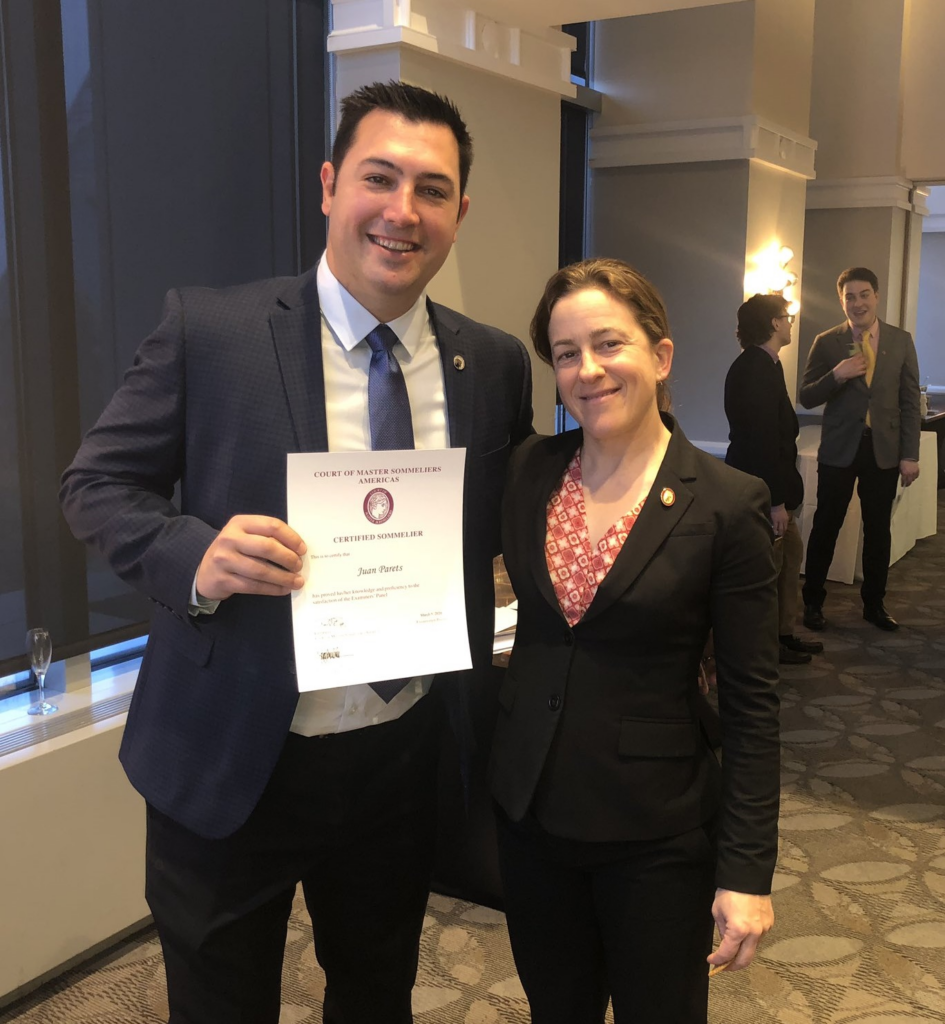
Went back. This time the Certified Sommelier Exam was in Philly.
And I passed.
Stop Looking for Answers
Passing didn’t mean I knew everything about wine, just like passing the CMT didn’t mean I know everything about markets.
It just meant I had a better process.
Today, I still sit down at restaurants and don’t recognize most of the wines on the list.
Not even close. But I know enough to ask the right questions. I’m not guessing. I’m narrowing.
Markets are the same.
We don’t know what tomorrow looks like. We’ve never seen next week’s tape before.
But we know what questions to ask.
Is price going up or down? Is it outperforming or underperforming?
Is momentum confirming or diverging? Is volatility expanding or contracting?
We’re not predicting. We’re eliminating bad decisions.
Everybody wants the answer. The professionals focus on asking better questions.
Once you start doing that, most of the wrong answers take care of themselves.
Stay sharp,
JC Parets, CMT
Founder, TrendLabs