
Every few months, a famous CEO says something cautious about the economy and the financial media reacts like the world is ending.
This week it was Jamie Dimon.
If you only read the headlines, you probably came away thinking the CEO of JPMorgan Chase (JPM) told everyone to stop buying stocks.
He didn’t.
In fact, that’s a perfect example of how financial headlines are designed to grab your attention, not necessarily explain what was actually said.
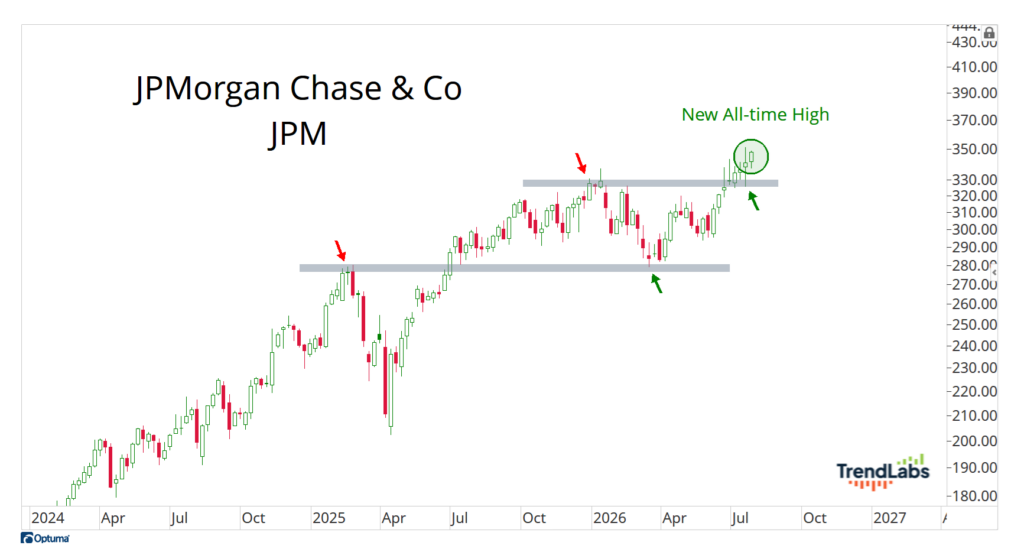
If Jamie Dimon has been so cautious for so long, why does the company he runs keep making new all-time highs?
Markets ultimately vote with prices, not interviews.
That’s Not Even What Jamie Dimon Said
Here’s what many of the headlines wanted you to believe:
“Jamie Dimon says don’t buy stocks.”
That’s a much scarier headline than what he actually said.
What he actually said was that he personally wouldn’t buy the broad stock market at today’s valuations.
He also said wouldn’t buy long-dated Treasury bonds because he believes investors are underestimating inflation, government debt, and geopolitical risks.
He added that he would absolutely buy an individual company if he found one trading at an attractive price.
Those are completely different statements.
Saying, “I don’t like today’s prices,” isn’t the same as saying, “Everyone should sell their stocks.”
Saying, “I’m waiting for a better opportunity,” isn’t the same as saying, “The market is about to crash.”
Those nuances don’t generate nearly as many clicks, so they often disappear from the headline.
That’s where everybody gets it wrong.
Legendary CEOs Have Different Jobs Than You Do
Jamie Dimon isn’t managing your retirement account. He’s running one of the largest banks in the world.
His job is to protect JPMorgan’s balance sheet, manage risk, satisfy regulators, prepare for recessions and make sure his bank is ready for almost any economic environment.
That’s what shareholders expect from him.
Your job is completely different.
If you’re saving for retirement, investing for your kids or simply trying to build wealth over the next 20 or 30 years, your goal isn’t to predict every twist and turn in the economy.
Your goal is to own productive assets and let time, compounding, and a repeatable process work in your favor.
That’s why following famous CEOs can be dangerous.
When Elon Musk sells stock, it doesn’t automatically mean you should.
When Warren Buffett builds cash, it doesn’t automatically mean you should.
And when Jamie Dimon says stocks look expensive, it doesn’t automatically mean you should abandon your investment plan.
They have their process.
We’ve Seen This Movie Before
This also isn’t the first time Jamie Dimon has made headlines with a warning.
On June 1, 2022, he famously said an economic “hurricane” was coming because of Fed tightening and the war in Ukraine.
He later suggested a recession could arrive within six to nine months.
Those comments dominated the financial news.
Many investors assumed the smartest banker in America must know something everybody else didn’t.
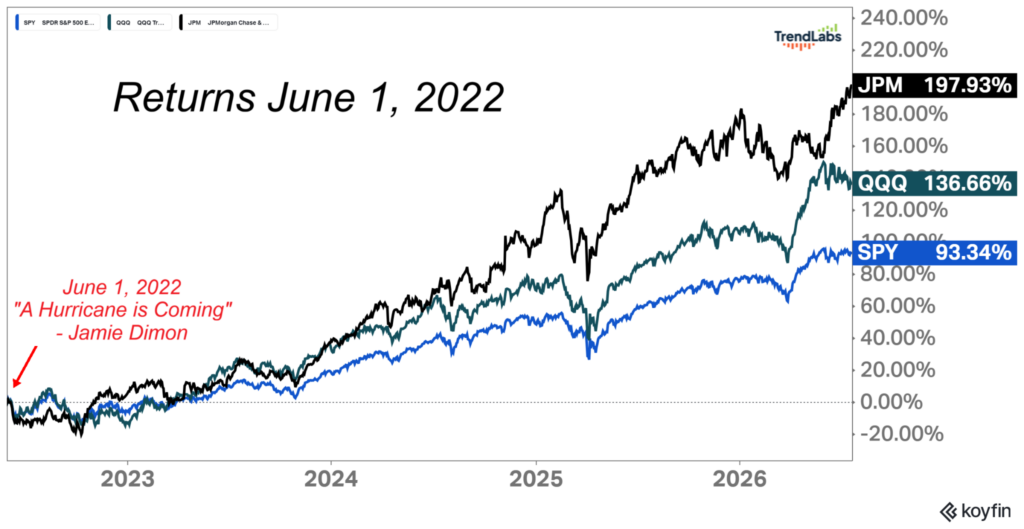
Did Jamie Dimon end up being wrong?
That’s actually the wrong question.
Jamie wasn’t trying to call the exact bottom or top of the stock market. He was explaining the risks that concerned him as the CEO of a global bank.
The mistake was made by everyone who interpreted those comments as an investment strategy.
Running one of the world’s largest banks and timing the stock market are two completely different jobs.
Follow Your Process, Not Someone Else’s
The biggest investing mistakes usually happen when people abandon a disciplined process because someone famous gave an interview.
That’s backwards.
If your strategy is to buy great businesses and own them for decades, keep doing that.
If your strategy is trend-following, follow your rules. If your strategy is to invest a little from every paycheck, keep investing.
Whatever your process is, stick with it. Markets reward discipline far more often than prediction.
The financial media gets paid to generate clicks. Legendary CEOs get paid to protect their businesses. Neither one is responsible for helping you achieve your financial goals.
Your portfolio doesn’t care about headlines. It cares about compounding.
The next time a famous CEO issues a warning, remember this: They’re making decisions for their shareholders, their employees and their company.
They aren’t making decisions for you.
And they shouldn’t be.
Stay sharp,
JC Parets, CMT
Founder, TrendLabs