There are only a few days left in the month, and before you know it we’ll be in May. The kids will be out of school, and summer is in the air.
This is as good a time as any to take a step back and see where sentiment fits in the bigger picture.
The S&P 500, the Nasdaq 100, the Russell 2000 Index of small-cap stocks, and the All Country World Index are all hitting new all-time highs.
So what are people doing?
Are Americans happy, like they tend to be near major tops? Or are they frustrated and pessimistic, like they tend to be when strong uptrends keep grinding higher?
Last week we looked at consumer sentiment hitting new all-time lows at the same time stocks were hitting new all-time highs. That’s exactly what you want to see if you’re betting on higher stock prices.
But one data point isn’t enough.
Where else can we look to understand how Americans are thinking and how they are positioned?
Because if history is any guide, we probably want to be doing the opposite.
So let’s take a look at where the so-called “smart money” stands, how everyday Americans feel about the economy, and what that means for those of us who actually care about what pays.
Where Are the Bulls?
The Barron’s Big Money Poll is out.
Twice a year, Barron’s surveys portfolio managers and strategists across the country. We’ve been using it as a contrarian indicator for years.
By the time they’re all bullish, it usually pays not to be.
When they’re bearish, like they were a year ago and back in 2016, that’s when you want to be buying stocks aggressively.
Right now, they’re telling you the S&P 500 is headed lower for the rest of the year:
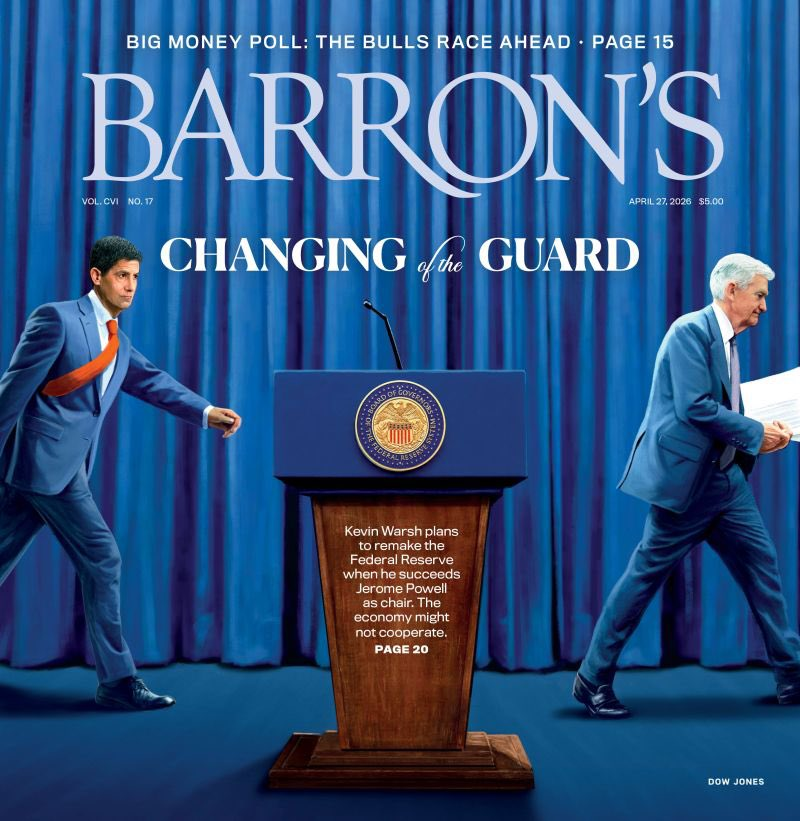
The average year-end target is actually below where the S&P 500 is today. It’s also well below Wall Street consensus.
So if they think the market’s going lower from here, the bet we want to make is that it’s probably going a lot higher.
That’s how this works.
When they were this pessimistic a year ago, stocks went on one of the greatest runs we’ve ever seen.
When they were this pessimistic 10 years ago in the spring of 2016, stocks were entering one of the smoothest, least-volatile uptrends in history.
They’re not quite as bearish today as they were in those moments. But they’re still leaning the wrong way.
And if you’re someone who owns stocks and is betting on higher prices, that’s exactly what you want to see.
Economic Conditions Are “Poor”
We just got the latest Gallup numbers. Americans are not feeling great.
And it’s not just the University of Michigan consumer sentiment data anymore. We’re seeing the same thing across the board.
Nearly 80% of Americans say economic conditions are poor or just fair. Only about one in five think things are good or excellent:
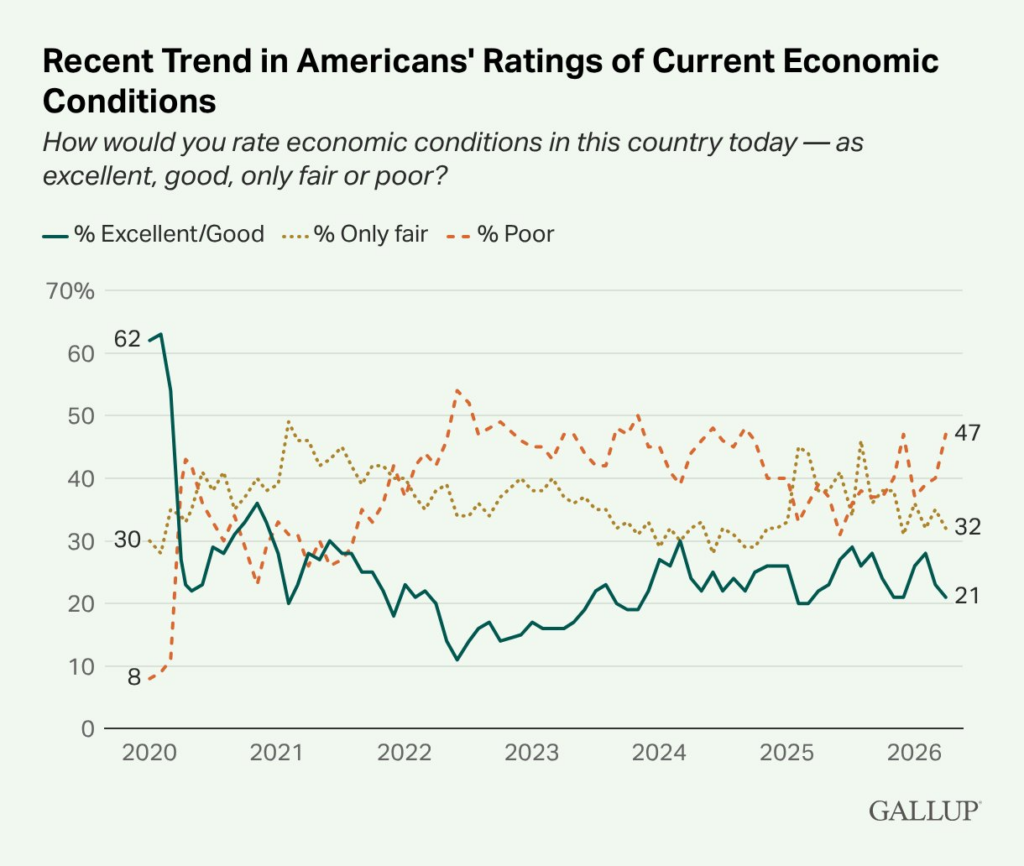
This is all happening with the S&P 500, the Nasdaq 100, and the Russell 2000 sitting at new all-time highs.
Think about that. Stocks are ripping, and almost nobody feels good about it.
In fact, 47% of U.S. adults now describe economic conditions as “poor,” up from 40% just last month.
Good.
We’re betting on higher prices. And we’re allocating capital accordingly.
Because by the time everyone thinks conditions are “excellent,” they probably won’t be.
And that’s when we’ll be happy to sell them all our stocks.
Now the question becomes, what do we do with this information?
How do you balance empathy for what people are experiencing, while still making rational decisions with your own capital?
Because those are two very different things.
Don’t Be Mean About It
This isn’t a time to be pounding your chest.
There are people out there struggling. You can see it in the data, and you can feel it when you talk to them.
Not everyone is experiencing this market the same way. So just be aware of that. Be kind. Be helpful where you can.
If you’ve been around here for a while, you know this already. And if you’re new, just understand that part matters to me.
But that has nothing to do with how we allocate capital.
Investing is selfish. It has to be.
We’re buying assets for one reason only: so we can sell them at higher prices later.
That’s the whole game.
While sentiment out there is negative, while people are anxious and frustrated, that’s exactly why we’re doing what we’re doing.
We’re betting on higher prices.
If the Gallup data showed everyone feeling great about the economy, we’d be thinking differently.
If the Big Money Poll showed strategists pounding the table with upside targets, we’d probably be fading that.
But that’s not what we’re seeing.
We’re seeing pessimism everywhere.
Good.
Come wake me up when everyone feels amazing about things.
That’s when we’ll be selling them everything.
Stay sharp,
JC Parets, CMT
Founder, TrendLabs