I love a good party.
The bell rings, the confetti falls, the talking heads scream about “the biggest IPO ever.”
The stock opens way above the deal price, rips higher, and everybody at home thinks, “Wow, I’m getting in early on this one.”
That’s the lie.
You are not early on Day One of a giant IPO.
Day One is when the early people finally get to sell to you.
The Chart That Ruins the Party
Our friend Ryan Detrick over at Carson Group put out one of my favorite tables.
It looks at the biggest IPOs since Google (GOOGL) came public in 2004.
Two simple columns: what they did on day one, and how far they fell in their first year.
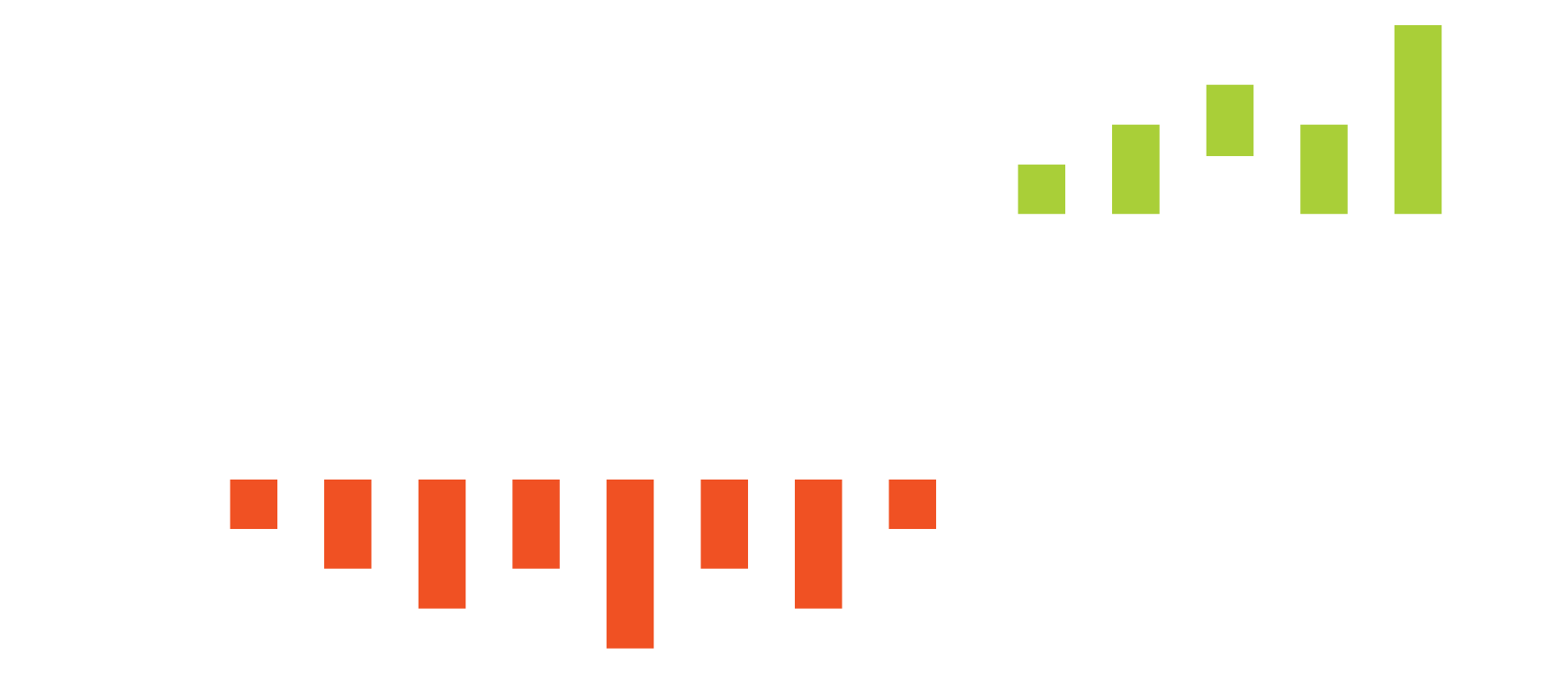
On the left, almost every bar is green. On average, these things jumped close to half on that first day.
In plain English, big pops are normal. The pop is the product.
On the right side of that chart, it’s a bloodbath:
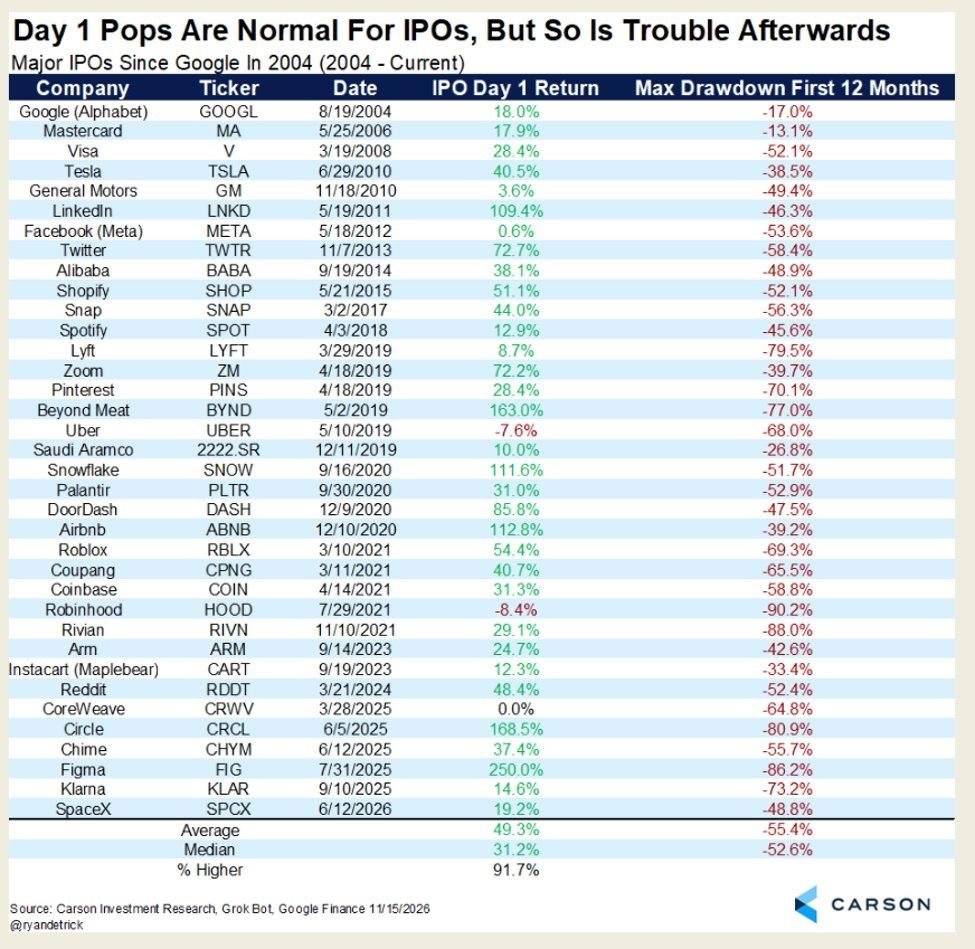
The average stock then got cut in half over the next 12 months.
Same list, same companies, two different days.
The pop and the pain are the same event, just photographed from different angles.
Some of the wildest pops had the nastiest hangovers.
Figma (FIG) more than tripled on Day One, then lost almost nine-tenths of its value.
Circle (CRCL) and Beyond Meat (BYND) exploded higher at the start, then got crushed.
Even the better-behaved names like LinkedIn (which traded under LNKD but is now part of Microsoft (MSFT)), Snowflake (SNOW), and Airbnb (ANBN) paid a big toll after the party.
The lesson is not “never own these stocks.” The lesson is “you do not have to chase the first pop.”
I wrote back in the spring that these giant deals are exit liquidity for the people who got in early.
That’s what the chart shows. Day One is their payday.
What an IPO Really Is
When I was first starting out, I thought an IPO was the beginning of a story. Fresh listing, bright future, get in on the ground floor.
It took me a while, and a few scars, to see what was really going on.
By the time a company is big enough to pull off “the biggest IPO ever,” a lot of people already own it.
Founders, early employees, venture funds, private equity: They bought in years ago, at levels you and I never saw.
The IPO is their chance to turn paper gains into real money.
When you see that first-day spike, that’s not a “welcome” sign for you. That’s a scoreboard for them.
You’re not walking into a quiet empty room. You’re walking into a crowded exit.
That’s why I don’t chase these things. I don’t care how good the story is, or how loud the hype gets.
If I’m going to get involved, I want the stock to prove it first.
We introduced the Genesis Line when SpaceX (SPCX) went public, and that stock stayed below it.
The Genesis Line is the average price paid since the first trade.
Think of it as the line where, above it, most people who bought are making money, and below it, most people are underwater.
How do we take advantage of the Anthropic IPO? We wait for it to get above the Genesis Line.
Anthropic started trading on Thursday, opened above that nice, round 100 level everybody loves to talk about, and then slipped back under it by the close.
By the end of Day One, the average person who bought Anthropic was already losing money.
There isn’t much of a chart so far, with only two days of trading, but right now the Genesis Line is just under 100.
That’s all I need to know right now: ANT is below its Genesis Line.
From the long side, there’s nothing to talk about.
When it gets above that line and can actually stay there, we can have that conversation.
Until then, why would I rush in to be somebody else’s exit?