Oil prices jumped nearly 14% this week after President Trump announced the United States would reimpose its blockade at the Strait of Hormuz.
Ships traveling through the waterway would also face a fee equal to 20% of the value of their cargo.
Almost immediately, investors started asking the obvious question: What if the world didn’t need the Strait of Hormuz anymore?
Buried in all the headlines were three words I don’t think we should ignore.
“Zero Hormuz Dependency.”
It sounds like something only a government bureaucrat could get excited about.
But I think it could become one of the biggest investing stories of the next decade.
Imagine you’re driving from Pennsylvania to Florida for a winter vacation.
Halfway through the trip, someone tells you the only road south goes through Texas first.
You’d think they were kidding. Why would anyone build a road like that?
That’s basically how the global energy market works today.
A huge amount of the world’s oil has to squeeze through one tiny stretch of water called the Strait of Hormuz before it can reach the rest of the world:
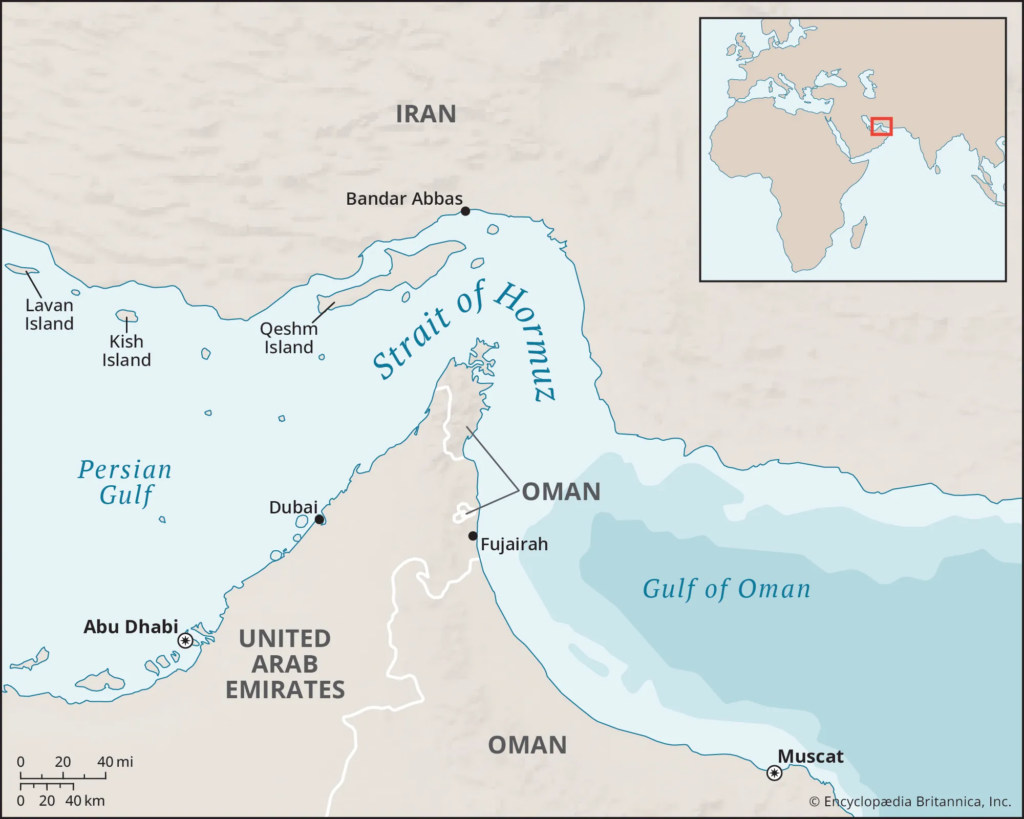
If there’s a problem there, everyone feels it.
Oil prices rise, shipping gets delayed, and countries start looking for another way.
That’s exactly what the United Arab Emirates has been working on.
Instead of forcing all that oil through one narrow bottleneck, it’s building pipelines, ports, storage tanks, and export terminals that let ships load on the other side and head straight into the open ocean.
That’s all “Zero Hormuz Dependency” means.
It’s not about digging another canal. It’s about building another route.
The second I understood that, I stopped thinking about oil.
I started thinking about the Suez Canal.
History Doesn’t Repeat. It Rhymes.
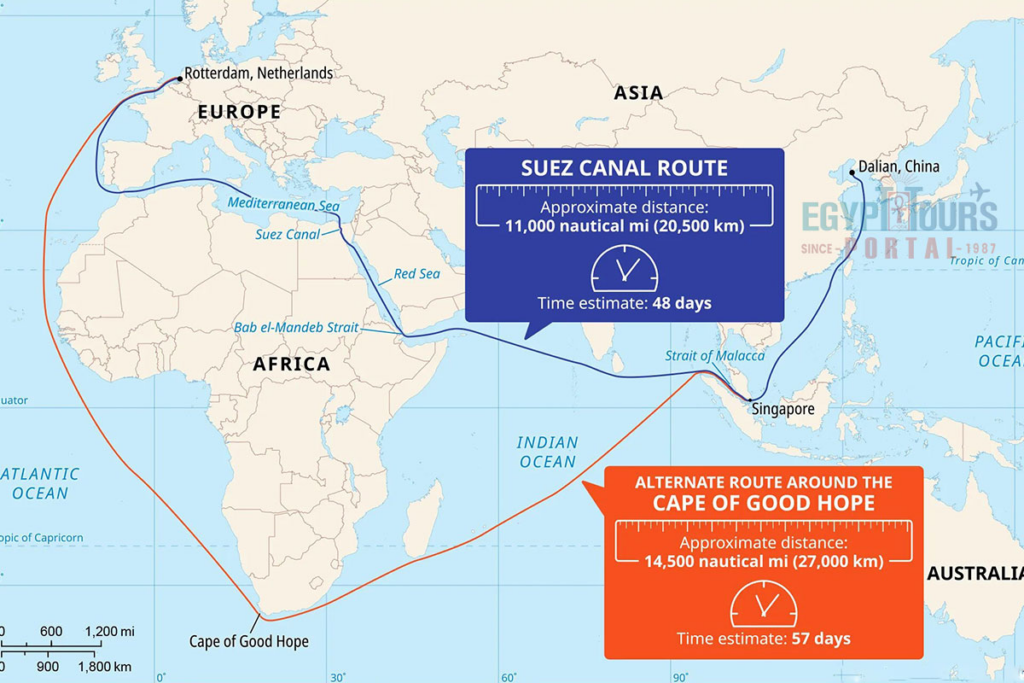
The Suez Canal cut thousands of miles off the journey between Europe and Asia.
Ships could make more trips every year. Goods arrived faster. Transportation became cheaper.
The world didn’t suddenly start trading because of the canal. It simply got a much better road:
Here’s the part I think matters most.
The biggest winners weren’t the people collecting tolls.
The biggest winners were the businesses that suddenly had a better road.
Shipping companies could make more voyages every year. Shipbuilders received more orders.
Ports became booming cities. Banks financed more trade.
Factories could suddenly sell their products to places that had been too expensive to reach.
The canal didn’t create commerce. It made commerce easier.
That’s where the real money was made.
The Companies Building the Next Shortcut
That’s why “Zero Hormuz Dependency” caught my attention.
I don’t think it’s really an oil story.
I think it’s another infrastructure story.
Whether this exact plan happens or not almost misses the point. The lesson is much bigger than that.
If you’ve already read The Heart and Soul of America, you know exactly where I’m going with this.
The world is building again.
Artificial intelligence needs enormous amounts of electricity. Electricity needs natural gas, nuclear power and transmission lines.
Natural gas needs pipelines. Pipelines feed export terminals. Export terminals need ports.
Every one of those projects needs steel, copper, valves, pumps, electrical equipment, engineering firms and construction crews. One project creates work for another, and then another after that.
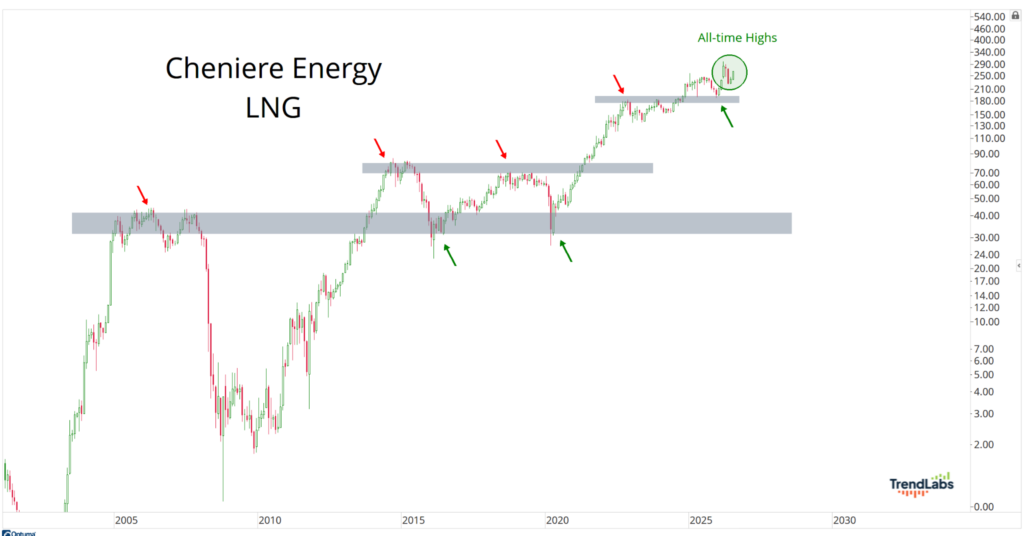
That’s why one of the first companies I think about is Cheniere Energy (LNG):
Notice something else.
Cheniere, America’s largest liquefied natural gas exporter, isn’t quietly participating. The stock is already making new all-time highs.
That’s exactly what you’d expect if investors believe America will export more LNG over the next decade.
If countries decide they want more energy from reliable partners and less dependence on one risky shipping route, America becomes a much more attractive supplier.
Cheniere doesn’t have to build anything in the Middle East to benefit.
It simply gives customers another option.
History tells us people are willing to pay for options when uncertainty rises.
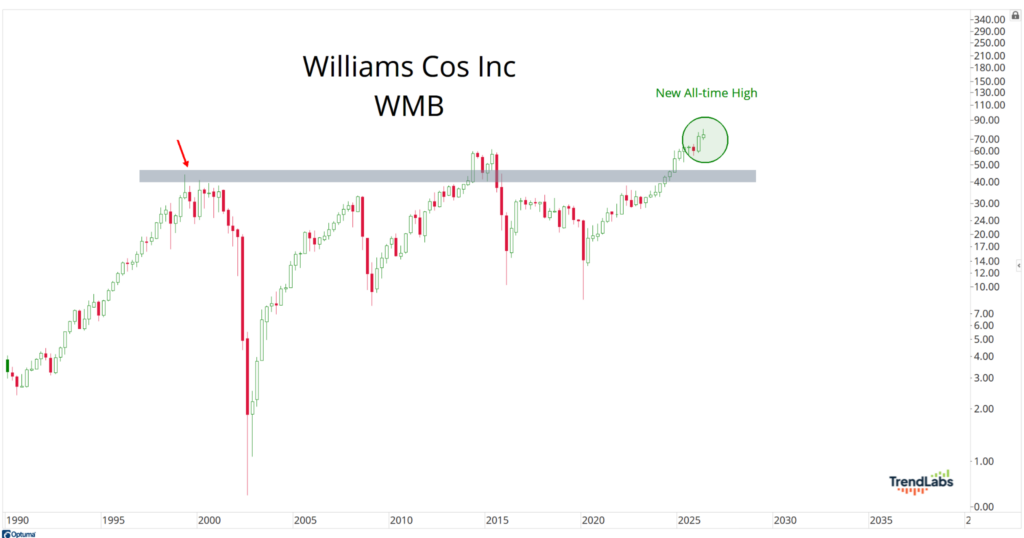
Another company that fits this theme is Williams Companies (WMB):
Before natural gas ever reaches one of Cheniere’s export terminals, it usually has to travel through someone’s pipeline.
Williams owns one of the largest natural gas pipeline systems in America, connecting production in places like Pennsylvania, Texas, and Louisiana to the Gulf Coast.
If America exports more natural gas over the next decade, somebody has to move it first.
Williams gets paid to make that happen.
The chart tells a story, too.
After spending nearly three decades building one enormous base, Williams is breaking out to new all-time highs.
Markets often recognize these themes long before the headlines do.
That’s why I couldn’t stop thinking about those four words.
The lesson isn’t to buy oil. The lesson isn’t to buy a canal.
It’s to own the businesses that become more valuable because somebody built a better route.
The Suez Canal changed the world 150 years ago by making trade easier.
If the world really starts building ways to reduce its dependence on the Strait of Hormuz, history suggests we shouldn’t just watch the headlines.
We should start looking for the companies building the pipelines, ports and export terminals that make the new route possible.
That’s usually where the biggest winners are hiding.
Stay sharp,
JC Parets, CMT
Founder, TrendLabs