Most people spend way too much time arguing about what’s new.
Artificial intelligence is new. Crypto is new. Tokenized stocks are new. Zero-days-to-expiration options are new.
Before that it was decimal pricing. Before that it was listed options. Before that it was the S&P 500 itself.
Markets keep evolving.
One hundred and fifty years ago, investors mostly just traded railroad stocks and banks.
Today, we have thousands of stocks, ETFs, cryptocurrencies, options, futures, and products that didn’t even exist a few years ago.
Everything changes.
Except us.
Human beings still get greedy. We still get scared. We still chase what everyone else is buying. We still panic when prices fall.
That hasn’t changed in hundreds of years. That’s why market history matters so much.
If you understand how people behaved decades ago, today’s market becomes a whole lot easier to understand.
The trick is knowing whether you’re looking at something that lasts a few years or something that lasts a few decades.
The Difference Between a Good Year and a Good Era
One of the most important lessons I’ve ever learned is the difference between a cyclical trend and a secular trend.
A cyclical trend usually lasts a few years. Think of it as the weather.
Sometimes it’s sunny. Sometimes it rains. Markets go through corrections, bear markets, recoveries, and rallies all the time.
A secular trend is different. It lasts for decades. That’s more like the climate.
People confuse these all the time.
The stock market crashed in 1987. It felt awful if you lived through it.
But it happened during one of the greatest secular bull markets in history. The market recovered and eventually kept climbing for another decade.
The bear market in 2022 felt terrible, too. Yet that decline happened while the long-term trend that began after the 2013 breakout remained intact.
The opposite also happens.
After the terrible 1974 bear market, stocks exploded higher in 1975. It was an incredible rally.
But that rally happened during a much larger secular period that spent nearly two decades moving sideways. Investors made money for a while, but the long-term breakout still hadn’t arrived.
Context changes everything.
Long before that, investors experienced something even more dramatic. When World War I began, the New York Stock Exchange actually closed for about four and a half months.
It remains the longest shutdown in its history. When trading finally resumed in December 1914, the market never looked back.
That reopening marked an important low, and prices climbed sharply afterward:
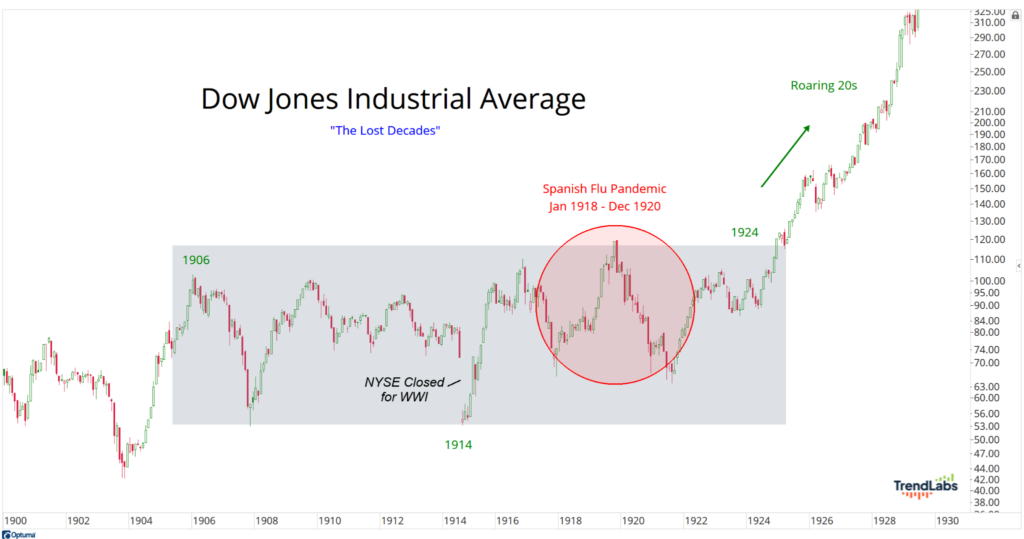
That rally was powerful.
But it also took place inside a much larger secular period that eventually led into the Roaring Twenties.
Understanding where you are in the bigger story is often more important than understanding what happened this week.
The Biggest Bases Build the Biggest Bull Markets
There’s an old saying on Wall Street: “The bigger the base, the higher in space.”
People didn’t invent that because it sounded clever.
They invented it because they lived through it.
After the Great Depression, stocks spent years rebuilding. By the time they finally exceeded their old highs, one of the greatest economic expansions in American history was underway.
The 1950s were fantastic for stocks before the market eventually slowed down during the ’60s:
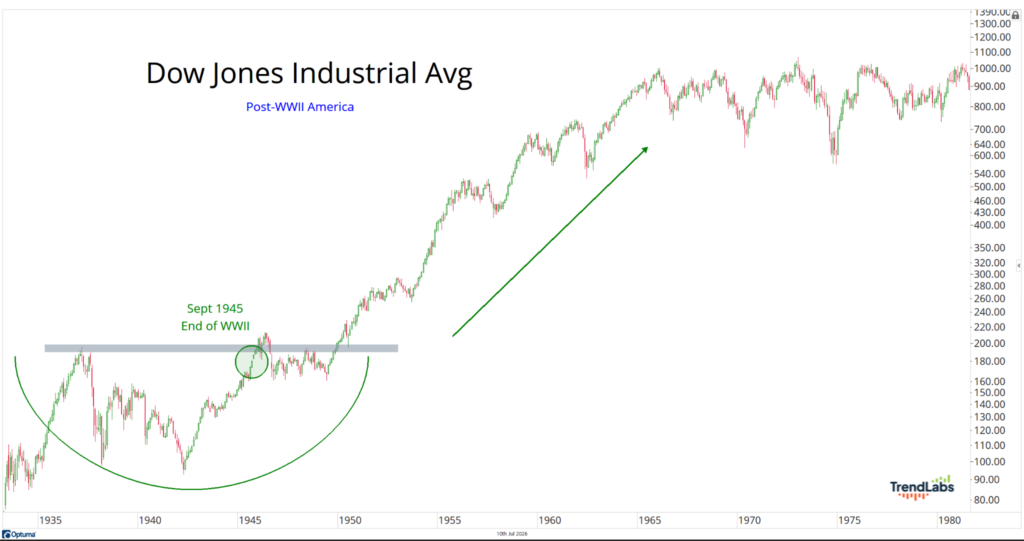
From the mid-’60s into the early ’80s, the market frustrated investors.
There were plenty of exciting rallies and scary declines, but when you zoomed out, stocks mostly went nowhere:
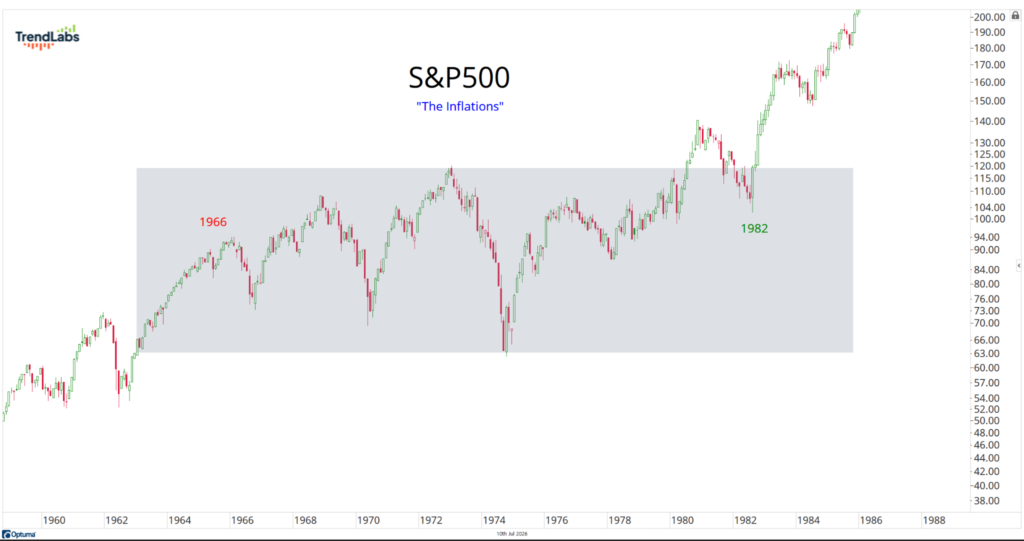
It took patience. Lots of it.
Then came 1982. That breakout changed everything.
The next 18 years became one of the greatest bull markets investors have ever experienced:
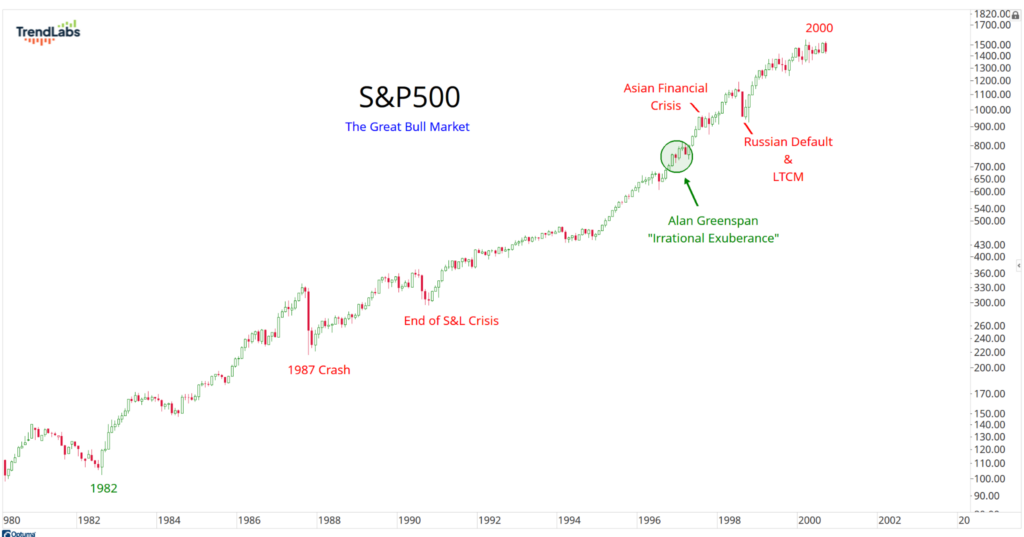
Then history rhymed again.
From 2000 until 2013, stocks spent another 13 years building a massive base. It wasn’t exciting.
There were two brutal bear markets. There were years when it felt like nothing was working.
Then came another breakout:
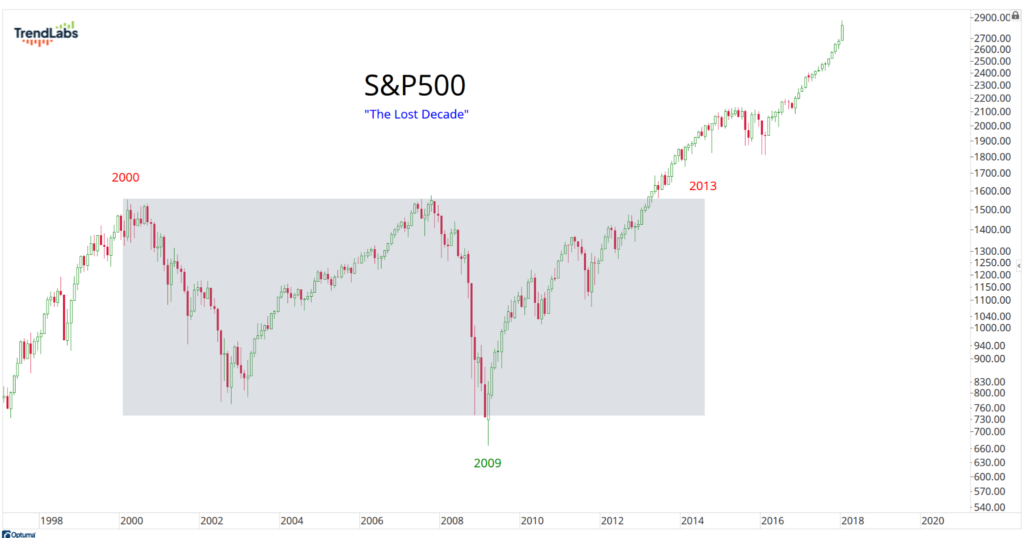
And here we are:
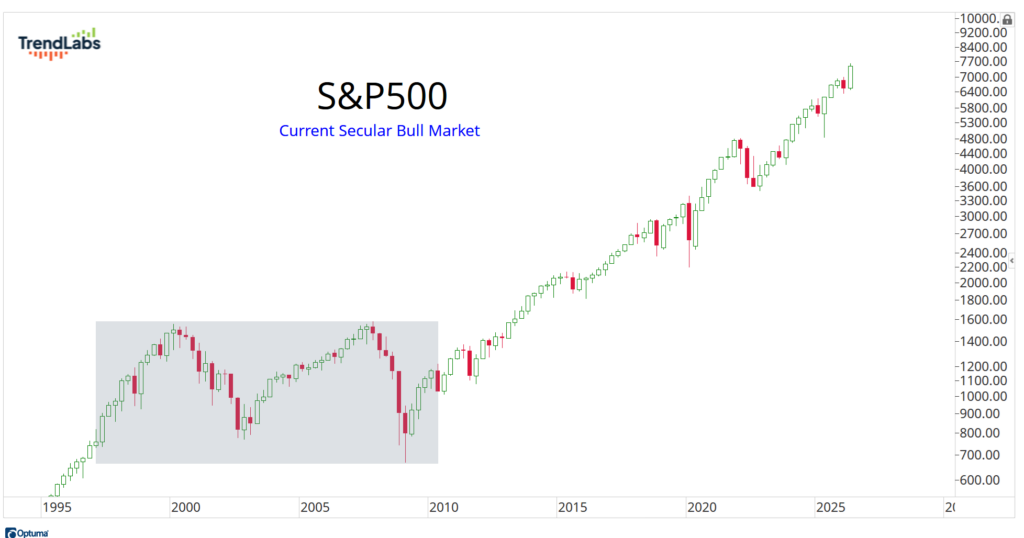
Could this secular bull market eventually end?
Of course. Every secular trend ends someday.
Another lost decade will probably come eventually because history tells us these periods are part of investing.
The evidence simply doesn’t suggest we’re there today.
Today’s market is making new all-time highs. Breadth remains strong. More stocks continue participating.
That’s exactly the kind of behavior we’ve seen during previous secular bull markets.
Maybe that changes next year. Maybe it changes several years from now.
We’ll deal with that when the evidence changes.
For now, the lesson from more than a century of market history is surprisingly simple.
Markets evolve.
People don’t.
And that’s exactly why understanding history gives investors such a tremendous advantage.
This Week in Everybody’s Wrong
On Monday, we saw that there’s an enormous amount of money sloshing around the financial system.
Markets are changing their rules, and people are excited.
Here’s why we’re watching the Genesis Line.
On Tuesday, we talked about a new “swan” on the scene.
One sentence from President Trump could trigger a 10% move before tomorrow’s opening bell.
This is where Orange Swan Risk becomes an opportunity.
On Wednesday, we asked a complex question.
The biggest financial decision my kids ever make might happen before they’re old enough to buy a drink.
Would I Trust My 18-Year-Old With $150,000?
On Thursday, we looked at exploding crack spreads.
The 3-2-1 crack spread measures how much refined products are worth above the crude oil that went into making them.
This is one of the loudest clues in the entire stock market right now.
On Friday, I told you I’m always looking for reasons to prove myself wrong.
Every midterm year, I pull out the same study, and every midterm year, I come away thinking the same thing.
It’s time to recognize one of the most consistent tendencies in market history.
On Saturday, Jason Perz broke through the headlines to explain what’s really happening with airline stocks.
They’re not following the “spiking crude oil” script.
Here’s Jason with another deep look at recent price action.
Have a great Sunday.
We’ll see you Monday morning…
Stay sharp,
JC Parets, CMT
Founder, TrendLabs